A bare dining table can look a bit like a canteen, and a full tablecloth can feel like too much effort for a Tuesday. A table runner sits neatly in between: one strip of fabric that makes the table look dressed in seconds, and it costs far less than new chairs or a new light.
The catch is that runners are easy to get slightly wrong. Too short and it looks like a scarf someone dropped; too wide and it swallows the plates. This guide covers sizes, the different ways to lay one, and how to build a simple centrepiece on top so the whole thing looks considered.
What a runner actually does
Before we get into measurements, it helps to know what you want the runner to do. It’s doing one or more of three jobs.
It adds colour and texture. Wood, glass and white plates can look a bit flat. A linen or lace runner softens the table and brings in a colour that ties to your curtains or walls.
It anchors the centrepiece. Candles, vases and bowls look like a group when they sit on a runner, rather than bits scattered around the table.
It protects the middle of the table. Serving dishes and candle holders tend to live in the centre, so a runner takes the knocks and drips instead of your tabletop.
Table runner size: how to get it right
This is where most people go wrong, so it’s worth a minute with a tape measure. The general rule is a runner that’s about 30cm (12in) longer than your table, giving roughly 15cm (6in) of drop at each end. For width, aim for about a third of the table’s width.
| Table size (seats) | Typical table length | Runner length to look for |
|---|---|---|
| 4 seats | 120cm (47in) | 150 to 180cm (59 to 71in) |
| 6 seats | 180cm (71in) | 210 to 240cm (83 to 94in) |
| 8 seats | 240cm (94in) | 270 to 300cm (106 to 118in) |
| Round, 4 seats | 100 to 120cm across | 150 to 180cm, laid across |
Some people like a dramatic look where the runner falls almost to the floor. That works well with light, floaty fabrics like cheesecloth or gauze at a party, but it’s less practical day to day as it will catch on knees and chairs.
How to use a table runner: four ways to lay it
There’s no single right way to use a runner. Pick the one that suits your table shape and how you eat.
Lengthways down the centre
The classic. It works on almost any rectangular or oval table and gives you a clear line for a centrepiece. Keep the drop even at both ends.
Across the table as shared placemats
Lay two or three shorter runners across the width of the table, so each one sits under a pair of facing place settings. It’s a clever way to use a runner on a wide table, and it looks modern and relaxed.
Layered over a tablecloth
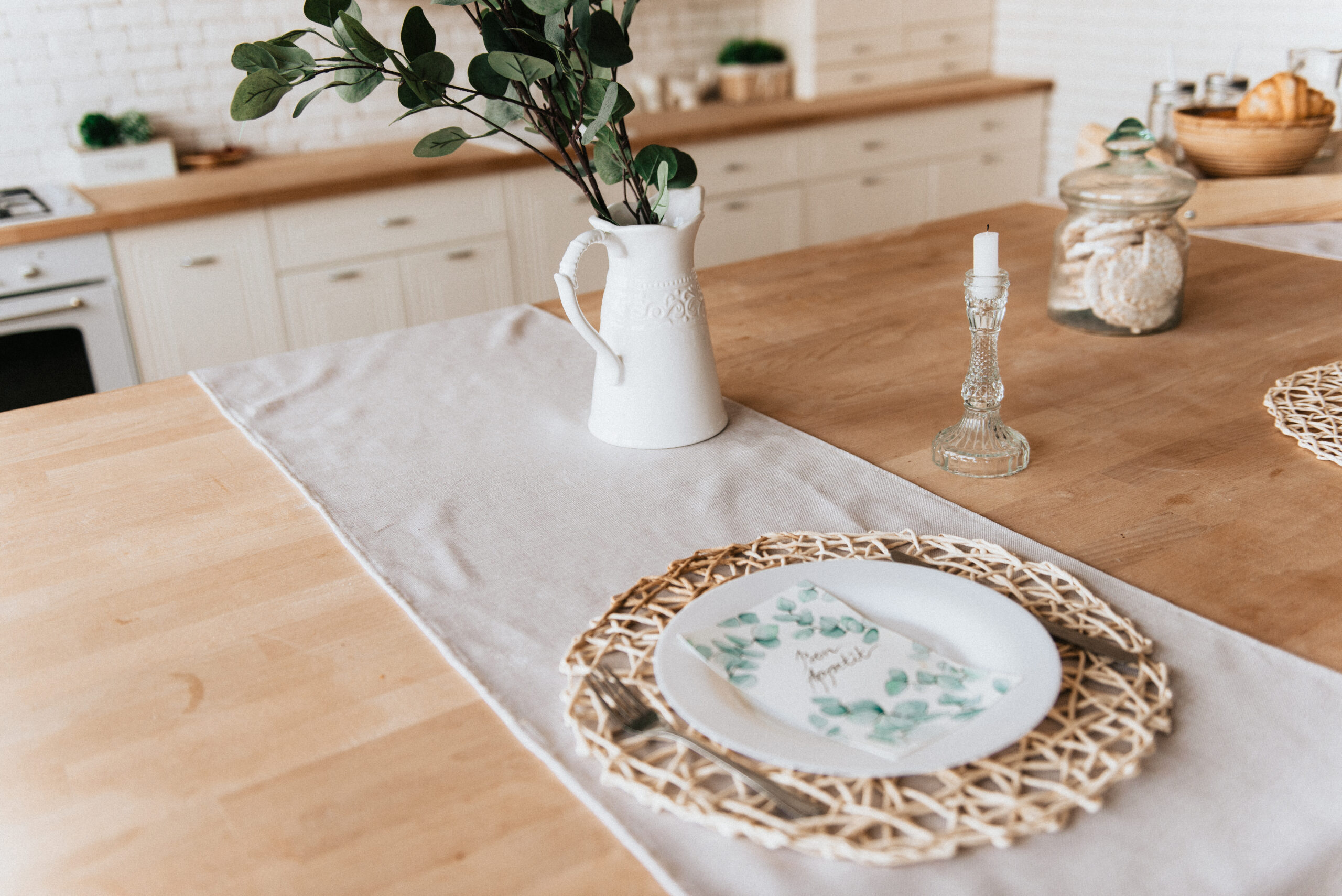
For Christmas, birthdays or Sunday lunch with the in-laws, put a plain cloth down first and a contrasting runner on top. A cream lace runner over a dark cloth, or a grey gauze one over white, feels special without much effort.
Off the dining table
Runners also look lovely on a sideboard, dresser or coffee table. A shorter one about 10cm (4in) narrower than the surface is ideal for a sideboard, with a lamp and a vase on top.
Picking the right fabric
Fabric decides whether your runner is an everyday helper or a special-occasion piece.
- Cotton and linen: relaxed, washable and suits farmhouse or Scandi tables. The Florvo cotton-linen runner measures 180 x 34cm and has hand-finished tassels, which makes it a good fit for a four to six-seater.
- Lace and crochet: vintage and pretty, especially on dark wood. The Clothfuna cream lace crochet runner has a floral pattern with wavy edges and would also suit a dresser or coffee table.
- Cheesecloth and gauze: soft, floaty and perfect for parties or weddings. The Artoid pearl grey gauze runner is a generous 70 x 300cm, so it can drape right over the ends of the table.
- Seasonal prints: fun for Halloween, birthdays or Christmas, but you’ll want a plain one for the rest of the year.
Building a dining table centrepiece
Once the runner is down, the centrepiece brings it to life. The easiest formula is to repeat a few simple things along the length of the runner, rather than one big arrangement in the middle that blocks everyone’s view.
Try this for an everyday table:
- Two or three bud vases with a single stem or a sprig of greenery each.
- A cluster of tealights in glass holders between them.
- Something with height at one or both ends, such as a pair of candlesticks.
Keep everything low enough that people can see each other across the table. A good guide is under 30cm (12in) for anything in the middle.
The Glasseam small bud vases come as a set of twenty in mixed shapes, so you can spread a few along the runner and keep the rest for later. For light, the Homemory LED tea lights are a flameless option that flickers like a real candle, which is reassuring if you have kids or a curious cat. Faux greenery is useful here too; our artificial plants guide has tips on choosing stems that look convincing.
Table setting ideas for every day and special days
Your runner can change with the occasion while everything else stays the same. These table setting ideas need very little extra kit.
Everyday
Runner, a bowl of fruit or a single plant, and that’s it. Leave space for the salt and pepper and the inevitable post pile.
Dinner with friends
Add candles, a few bud vases, and cloth napkins folded on each plate. Dim the main light and let the candles do the work.
Celebrations
Layer the runner over a tablecloth, add a garland along the centre, and scatter tealights in holders. Mercury glass holders catch the light beautifully. If you’re decorating the walls too, our kitchen wall decor ideas can help tie the room together.
Our picks for styling a runner
These are the pieces we’d use to build a table from scratch. We picked them because they’re versatile and work across seasons.
- Florvo cotton-linen runner: an everyday runner with tassels and a natural texture.
- Artoid pearl grey gauze runner: long, floaty and good for parties.
- Glasseam small bud vases: a big set of mini vases for a low, spread-out centrepiece.
- Inweder small brass candlesticks: a delicate pair to add height at the ends.
- MAIJIAJU mercury glass tealight holders: speckled glass holders that sparkle once lit.
See more in our table runners and cloths, centrepieces and table decor and candles and candle holders collections.
Table runner FAQs
How long should a table runner be?
Aim for about 30cm (12in) longer than your table, so roughly 15cm (6in) hangs off each end. For a dramatic look, you can go longer, but keep it practical for everyday meals.
Should a runner hang over the edge?
Usually, yes. A small drop at each end looks finished, while a runner that stops short of the edge can look like it’s the wrong size. On a round table, let it hang evenly on both sides.
How wide should a table runner be?
Roughly a third of your table’s width is a good rule. On a 90cm (35in) wide table, that’s around 30cm (12in). Wider runners can work on large tables but leave less room for plates.
Can you use a runner on a round table?
Yes. Lay one across the middle, or cross two runners at right angles for a celebration table. Keep the centrepiece in the middle where they meet.
Do you put placemats on top of a runner?
You can if the runner runs across the table under each pair of settings. With a lengthways runner, placemats usually sit either side of it rather than on top, which keeps everything flat and steady.
A good runner is one of the simplest ways to make meals feel a bit more special, and it’s easy to swap with the seasons. Find more ideas for eating and entertaining in our dining room section.