Most bedrooms are lit by a single ceiling light that’s far too bright at 11pm and somehow too dim when you’re hunting for a matching sock at 7am. Good bedroom lighting fixes both problems, and it rarely needs an electrician or a big budget to get there.
This guide walks through the layers that make a bedroom feel calm in the evening and practical in the morning: the main ceiling light, wall lights, bedside lamps and a little soft accent glow. We’ve kept it realistic for UK homes, rented ones included, and finished with a handful of pieces we picked from our own range.
Why bedroom lighting works best in layers
Lighting designers talk about three layers, and the idea is simpler than it sounds. Ambient light fills the room, task light helps you do something specific like reading, and accent light adds mood. A bedroom that only has the first layer tends to feel flat and a bit clinical.
The trick is giving yourself choices. In the morning you want everything on. In the evening you want the big light off and two or three softer pools of light around the bed and the corners of the room. Once you think in layers, choosing individual lights gets much easier.
| Layer | What it’s for | Where it usually goes | Easy options |
|---|---|---|---|
| Ambient | General light for dressing, cleaning and tidying | Ceiling | Pendant, flush or semi-flush fitting |
| Task | Reading, make-up, getting ready | Bedside, dressing table, wall by the bed | Bedside lamps, clip-on or wall-mounted reading lights |
| Accent | Mood and a soft glow before sleep | Headboard, shelves, window, corners | Fairy lights, a small lamp with a woven or fabric shade |
Ceiling lighting for bedroom spaces: get the main light right
Your ceiling light does the heavy lifting, so it’s worth choosing one that suits the room rather than whatever came with the house. In a typical UK bedroom with a standard ceiling height, a semi-flush or flush fitting keeps the light out of the way and avoids anyone clipping it with a duvet cover.
If you’ve got a bit more height, a pendant is lovely over the foot of the bed. An open, multi-arm design like the SERBASIC Sputnik ceiling light throws light in several directions, which helps the room feel evenly lit rather than spotlit from one point. Just remember it takes separate bulbs, so pick warm ones.
Dimmers make the biggest difference
If you change one thing, make your main light adjustable. A dimmer switch is a quick job for an electrician, but if you’re renting there’s an easier route: an LED fitting with its own remote. The RGB LED ceiling light with remote control lets you shift between brightness levels and colour temperatures from the bed. Fitting it is a standard light swap, and from then on there’s no extra switch to wire in.
Bulbs matter as much as the fitting
A beautiful pendant with a harsh, cool-white bulb will still feel like an office. For a bedroom, look for bulbs labelled warm white, which usually sit around 2,700K. Save cooler light for wardrobes or a dressing table where you need to see colours properly.
Wall lighting bedroom ideas that suit renters too
Wall lights free up bedside table space and look smart in pairs either side of the bed. Hardwired wall lights are the neat option if you’re redecorating anyway, but they mean chasing cables into the plaster.
The no-drama alternatives are plug-in wall lights with the cable tidied into a fabric sleeve, or a small clip-on reading light. The clip-on rechargeable reading light can be mounted on the wall or clamped to a headboard or shelf, and it switches between warm, natural and cool white. That makes it handy for reading in bed without waking a partner with the main light.
Whatever you choose, position reading lights so the light falls over your shoulder onto the page rather than straight into your eyes. Roughly shoulder height when you’re sitting up in bed is a good starting point.
Bedside lamps: the light you’ll actually use most
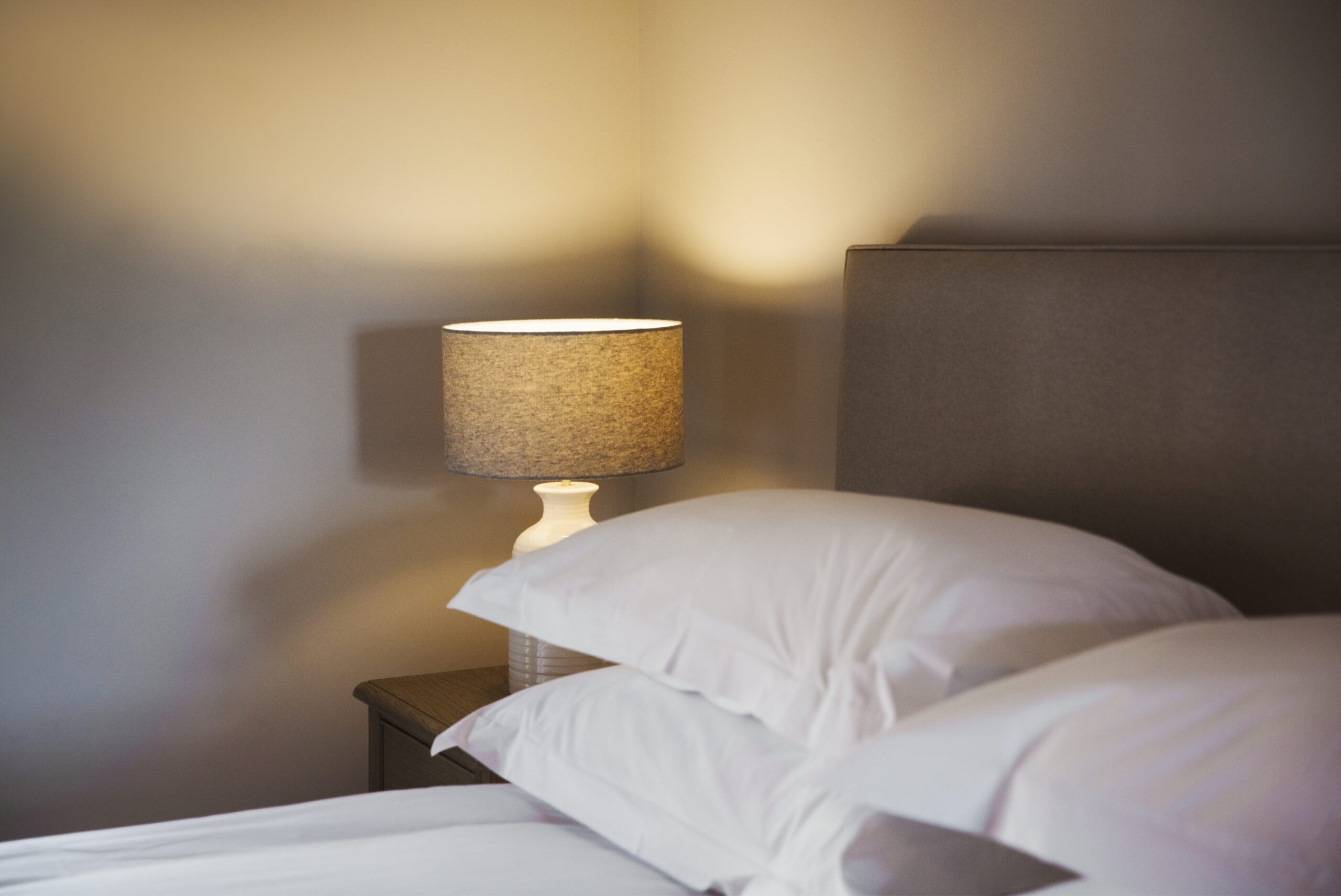
Ask most people which light they use in the evening and the answer is the bedside lamp. It’s the one you switch on as the big light goes off, so it’s worth getting the size and shade right.
A fabric or linen shade diffuses light gently, which is exactly what you want at bedtime. Glass shades look crisp but can be brighter, so a frosted finish is kinder. Match the lamp to the table: a tiny lamp looks lost on a wide bedside cabinet, while a tall one can tower over a slim table.
Handy features worth looking for
- Touch controls, so you can turn it on by tapping the base rather than fumbling for a switch in the dark.
- Built-in USB charging ports, which free up a socket for your phone.
- Dimming, or at least a few brightness levels, so the lamp works for reading and winding down.
- Cordless designs, which are great where sockets are in awkward places.
If you’re weighing up shapes and shade sizes in more detail, our guide on how to choose a table lamp goes deeper. The same principles apply in the living room too, and our living room lighting ideas cover how to carry the same warm feel through the house.
LED lighting for bedroom comfort and bedroom smart lighting
LED bulbs are now the sensible default: they run cool, last well and come in warm tones that look much like old-fashioned bulbs. When you buy, check the colour temperature on the box rather than going by the wattage alone.
Colour-changing LED lights have their place, especially in children’s rooms and for gamers, but use them as an accent rather than your main light. A soft amber or warm white glow is much more restful before sleep than bright blue or purple.
Smart bulbs and remote-controlled fittings are useful if you like routines, such as lights that gently brighten in the morning or switch off at a set time. Many simpler lamps now include timers too, which covers most of what people actually use.
Accent lighting and fairy lights without the student-flat look
Fairy lights get a bad name because of the way they’re often used: stapled round a window frame and left on all year. Used with a bit of restraint, they add a lovely low glow that makes a bedroom feel cosy on dark winter evenings.
Try draping a short string loosely along a headboard, over a mirror or through a shelf of books. Battery-powered strings with a timer, like the BOLWEO star fairy lights, mean no trailing cable and no need to remember to switch them off.
A small lamp in a corner does a similar job. Woven or bamboo shades cast pretty patterns on the wall, which is a nice touch on a chest of drawers away from the bed.
Bedroom lighting ideas for a calmer bedtime
Light has a real effect on how wound-up or relaxed you feel in the evening. A few habits help the room do its job:
- Switch the ceiling light off an hour or so before bed and rely on lamps.
- Keep bulbs near the bed warm white and fairly low in brightness.
- Use a dimmable bedside lamp so you can turn it down as you read.
- Block outside light at night too. Street lamps and early summer sunrises undo a lot of good work, which is where blackout curtains for the bedroom come in.
Our picks for bedroom lighting
These are pieces we picked from our bedside table lamps and ceiling lights collections because they suit the ideas above.
Best budget bedside lamp: HAIJED linen shade lamp
The HAIJED bedside table lamp pairs a linen fabric shade with a wooden base and a classic on/off switch, and it comes with a warm LED bulb. It’s a simple, good-looking budget option, ideal for a guest room or a first flat.
Best for pairs: MIAOLIAN dimmable lamps, set of 2
Matching lamps either side of the bed always look considered. The MIAOLIAN bedside lamps set of 2 have frosted glass shades, a knob dimmer and USB and AC charging outlets, so they handle reading, winding down and charging in one go.
Best touch-control lamp: Totofac with USB-C
The Totofac touch bedside table lamp has three brightness levels you change by tapping the base, plus USB-C and USB-A charging ports. The grey flaxen shade gives a soft, diffused light that suits a calm bedroom.
Best for texture: HUAMI bamboo lamp
The HUAMI bedside table lamp has a handmade double-layer bamboo shade on a wooden base. The bamboo strips soften the light and add a natural, relaxed feel, which works well in a boho or Scandi-style room.
Bedroom lighting FAQs
What is the best lighting for a bedroom?
A mix works best: a ceiling light for general use, bedside lamps or wall lights for reading, and a soft accent light for the evening. Warm white bulbs suit bedrooms better than cool white, and dimmable options give you the most flexibility.
What colour light is best for sleep?
Warm, low light is the most restful option in the evening. Look for bulbs described as warm white and avoid bright cool or blue-toned light near bedtime. Turning the main light off and switching to lamps for the last hour helps the room feel calmer.
Should a bedroom have a ceiling light?
Most bedrooms benefit from one for cleaning, dressing and dark mornings, but it shouldn’t be your only light. If you’d rather not use it much, make sure it’s dimmable or on a remote, and rely on lamps and wall lights the rest of the time.
How high should a bedside lamp be?
A useful rule is that the bottom of the shade should sit roughly level with your chin when you’re sitting up in bed. That keeps the bulb out of your eyeline while still lighting your book. Also keep the lamp in proportion with the bedside table.
Can I add wall lights without rewiring?
Yes. Plug-in wall lights, rechargeable clip-on reading lights and cordless lamps all give you task lighting without new wiring. They’re a good choice for renters, and you can take them with you when you move.
You don’t need to change everything at once. Start with warm bulbs and a decent bedside lamp, then add a dimmable main light and a bit of accent glow as the budget allows. Browse our full bedroom collection for lamps, lights and the cosy finishing touches that go with them.