A hallway runner looks like the easiest buy in the house, right up until it arrives, stops well short of the kitchen door and catches every time you open the front door. Getting the size, pile and backing right is what separates a runner you love from one that ends up rolled in the cupboard.
This guide covers how to measure, which sizes suit which hallways, how the main materials compare and whether washable runners are worth it. By the end you’ll know exactly what to look for before you click buy.
Hallway runner size guide
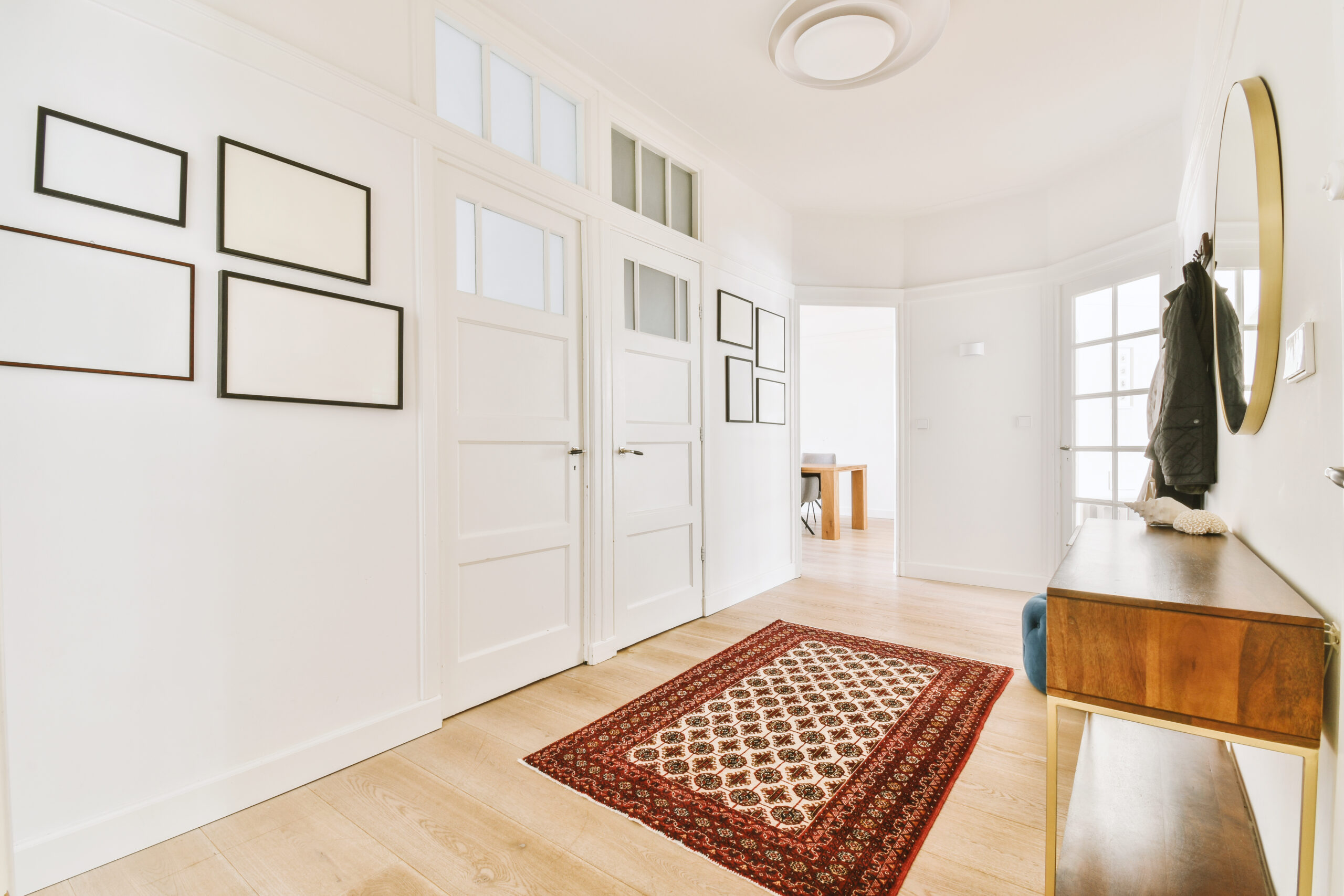
The golden rule is to leave some floor showing around the edges. A runner that runs right up to the skirting looks like badly fitted carpet, while one with a border of floor on each side looks deliberate and makes the hallway feel wider.
Width
Aim to leave around 10 to 15cm (4 to 6 inches) of floor visible on each side. In a typical UK hallway of around 90cm to 1m wide, that usually means a runner 60 to 70cm wide. Narrower hallways or entrance lobbies suit a 50cm runner better.
Length
Leave roughly 15 to 30cm (6 to 12 inches) of floor at each end. In a long hallway, it’s fine to stop the runner before a doorway rather than squeezing it in, and in very long hallways two runners of the same design can work better than one.
How to measure your hallway
- Measure the full length of the hallway floor, from the front door threshold to the far end.
- Measure the width at the narrowest point, such as by a radiator or the bottom stair.
- Take off 30 to 60cm from the length and 20 to 30cm from the width to find your ideal runner size.
- Check where doors open across the floor, and note how much clearance there is underneath.
- Mark the size out with masking tape and live with it for a day before you order.
Here’s how the common runner sizes tend to fit.
| Runner size | Best for | Notes |
|---|---|---|
| 50 x 150cm | Entrance lobbies, short or narrow hallways | Also handy inside the front door |
| 60 x 180cm | Most terrace and semi hallways | A safe middle-ground size |
| 60 x 220cm | Medium to long hallways | Good for running past the stairs |
| 60 x 300cm | Long hallways and landings | Check door positions first |
| 65 to 70cm wide | Wider hallways over 1m | Keeps the side borders in proportion |
Choosing a hallway runner rug material
A hallway runner rug takes more traffic than almost any other rug in the house, so material matters as much as looks. Here’s how the main options compare.
Wool
Wool is hard-wearing, naturally springy and doesn’t flatten easily, which is why it’s a classic choice for hallways. It’s also more expensive and usually needs professional cleaning rather than a trip to the washing machine.
Jute and sisal
Natural fibres look great in period homes and add texture underfoot. They’re tough but can be scratchy, and they don’t love water, so they’re better further down the hallway than right inside the front door.
Polypropylene and other synthetics
Synthetic runners are affordable, stain resistant and easy to clean, and they come in endless colours and patterns. Most washable runners fall into this group, which makes them a practical choice for busy family hallways.
Shaggy and soft-pile runners
Thick, fluffy runners feel lovely underfoot, but they show footprints and trap dirt more readily. They’re better suited to a landing or bedroom corridor than the main entrance hall.
Washable hallway runners: are they worth it?
For most homes with children, pets or a muddy garden path, a washable hallway runner is the most practical choice going. Instead of scrubbing at stains, you can simply wash the whole thing.
Washable runners tend to be thin and low pile, which has a second benefit: doors open over them easily. The SHACOS boho runner is a 50 x 150cm, low-pile, washable design with a distressed pattern that’s forgiving of everyday marks.
Before you wash any runner, check the care label. Some are machine washable on a cool cycle, while others are better hand washed or spot cleaned. Let them dry flat or over a rail, never on a radiator, to protect the backing.
Hallway runner carpets vs loose runner rugs
You’ll see two kinds of product when you search: hallway runner carpets, which are usually sold by the metre and fitted or bound to length, and loose runner rugs in set sizes.
Fitted runner carpets can be cut to the exact length of your hallway and are often used on stairs too. Loose runners are cheaper, can be moved or washed, and are the obvious choice if you rent. For most people decorating on a budget, a loose runner in a standard size does the job well.
Keeping your runner in place
A runner that slides or ruckles is a trip hazard, especially near the stairs or front door. Most modern runners have a non-slip backing, which is the first thing to check on any listing.
On very smooth hard floors, add a rug gripper or underlay cut slightly smaller than the runner. If you’re putting a runner over carpet, choose a low-pile design so it doesn’t creep.
Right by the front door, a low-profile dirt-trapper mat works well alongside a runner. The GULLAMBO indoor door mat has a rubber-style backing that grips wood, laminate, tile and vinyl floors, and catches grit before it reaches the runner.
Colour and pattern that hide the mess
Hallways get muddy, so plain pale runners will show every footprint. Mid-tones, greys and busy patterns are far more forgiving. A runner with a border or geometric design also helps draw the eye along the hallway, making it feel longer.
If your walls and floors are fairly neutral, the runner is a great place to add colour. For more ways to bring the space together, see our hallway decorating ideas.
Our picks: runners for every size of hallway
We picked these to cover the most common hallway sizes, from a short entrance to a long corridor, all with non-slip backing listed.
- SHACOS grey hallway runner: 50 x 150cm, non-slip and washable. A neat, neutral option for short or narrow hallways.
- BYBSRLL floral runner: 60 x 180cm, low pile and machine washable in cold water, according to the listing. A good all-rounder for the average hallway.
- Aolawco hallway runner: 65 x 180cm, washable and non-slip, and a touch wider for roomier hallways.
- Hafaa shaggy runner: 60 x 220cm in grey with a thick, soft pile. Best for a landing or bedroom corridor.
- Cycleader geometric runner: a long 60 x 300cm runner with a TPR non-slip backing and a soft faux cashmere feel, for long hallways.
Hallway runner FAQs
What size runner do I need for my hallway?
Measure the hallway and leave about 10 to 15cm of floor showing on each side and 15 to 30cm at each end. For most UK hallways, that works out at a runner 60cm wide and 180 to 220cm long.
Can you put a runner on carpet?
Yes, but choose a low, flat pile and use a rug gripper designed for carpet. Thick runners on top of carpet tend to creep and bunch up over time.
Are washable hallway runners any good?
They’re a very practical choice for busy homes, as you can wash out mud and spills rather than scrubbing. They’re usually thinner than wool runners, which helps doors open smoothly over them.
How do I stop a runner from slipping?
Choose a runner with a non-slip backing, then add an underlay or rug gripper on smooth hard floors. Make sure the edges lie flat so nobody catches a foot on them.
Should a runner go all the way to the wall?
No. Leaving a border of floor visible on each side makes the runner look intentional and the hallway feel wider, as well as making it easier to clean around.
Find your perfect runner
Measure carefully, pick a material that suits how busy your hallway is, and check for non-slip backing. Get those three right and your runner will look good for years. Browse all our runners and rugs and door mats, or see our full hallway range for mirrors, lighting and more.